
How to Check Criminal History in Middlesex County
Start with the kind of fact you need. A Superior Court prosecution belongs in PROMIS/Gavel and the Middlesex Criminal Records Room. A traffic, ordinance, disorderly-persons, or petty-disorderly-persons matter usually begins in Municipal Court Case Search. Current county custody appears through the Adult Correction Center lookup. A police narrative stays with the department that made the arrest. None of those public views is the same as fingerprint-linked New Jersey Criminal History Record Information, or CHRI.
Names alone are weak identifiers. Gather the full legal name, former names, an approximate date of birth, the municipality, the arrest date, and any complaint, indictment, ticket, report, or booking number. Then use this Middlesex County criminal record sequence:
- Search the court system that fits the alleged offense and municipality.
- Check current county or state custody only when confinement is part of the question.
- Record the complaint, indictment, booking, or report number shown by the official source.
- Request the underlying report, judgment, dismissal, or disposition from its custodian.
- For self-review, use NJSP fingerprint processing and challenge errors with source documents.
The most useful identifier changes as a matter moves. Police use a report number. Adult Corrections assigns a booking or custody identifier. Municipal courts use ticket or complaint segments. Superior Court uses an indictment or accusation number. Saving each one reduces common-name errors and lets a clerk find the right item without being asked to research a person’s whole history. Use alternate spellings only as a search aid, then confirm the match against court, date, and charge details.
Middlesex Criminal Court Search Split
Middlesex County does not have one court box that searches every criminal matter. The New Jersey Courts criminal practice page routes the public to PROMIS/Gavel for Superior Court criminal case information. The separate Municipal Court Case Search covers traffic and local complaints. Search both when the original charge level is unclear. A municipal complaint can remain local, while an indictable charge can move to the Criminal Part in New Brunswick after prosecutor review.
The Judiciary image below shows the official criminal tools page that leads to PROMIS/Gavel.
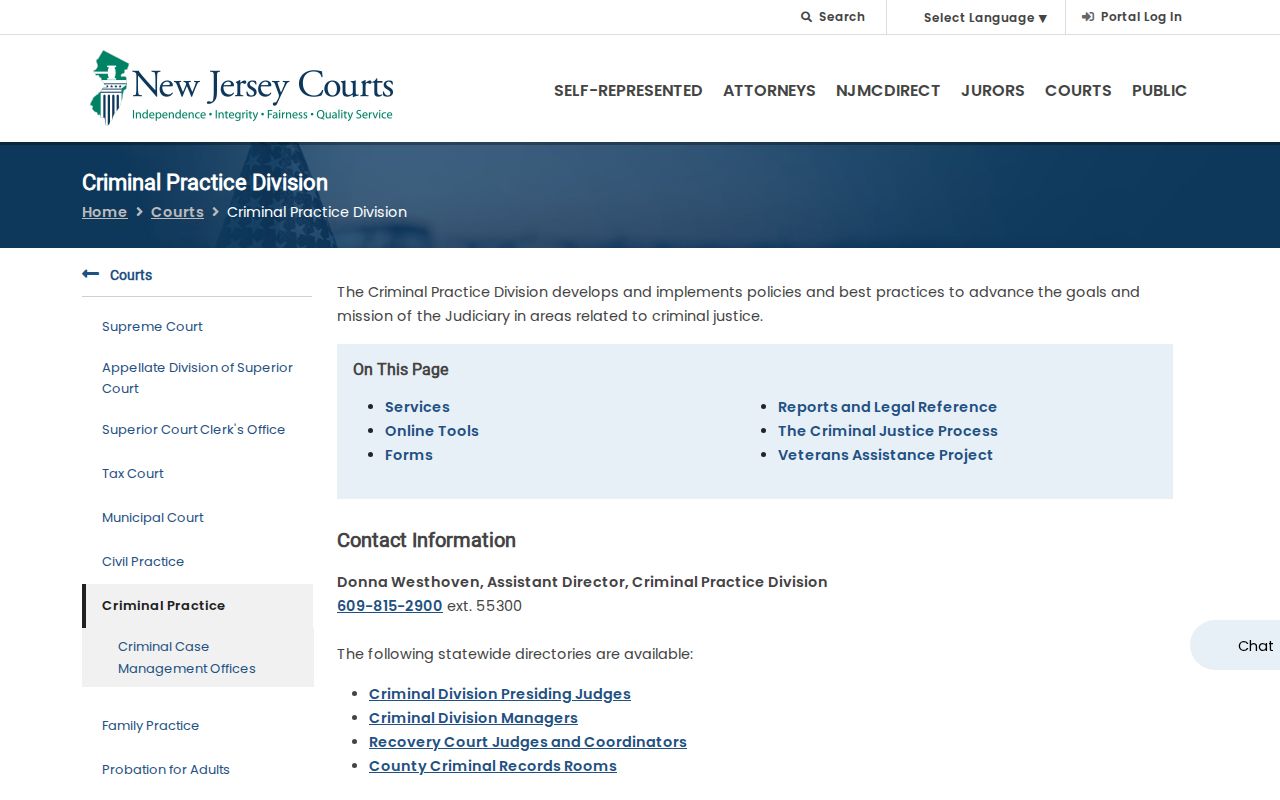
That landing page is more durable than a session-based search address and also points readers toward judgments, expungement, Pretrial Intervention, and Recovery Court information.
PROMIS/Gavel is a public information view of a shared criminal tracking system. It is not the attorney eCourts filing service and does not promise free access to every document. A result may identify the county, defendant display name, indictment or accusation number, charges, and case status. Save those identifiers. If the outcome matters, ask the Criminal Records Room for the judgment, dismissal order, indictment, or other source document. Search failures can reflect spelling, date range, indexing lag, an archived matter, or a protected file rather than the absence of a case.
| System | Useful fields | Best use |
|---|---|---|
| PROMIS/Gavel | Defendant name, county, indictment or accusation number, year | Middlesex Superior Court criminal cases |
| Municipal Court Case Search | Ticket number, Court ID, prefix, year, complaint number, or enabled name route | Municipal and traffic cases |
| Criminal Records Room | Case identifier and document description | Public copies and certifications |
Official New Jersey Background Checks
New Jersey does not sell an unrestricted public name search for another person’s state rap sheet. The New Jersey State Police, State Bureau of Identification, holds the central CHRI repository. An individual can request their own New Jersey record through the NJSP Personal Record Request process. The correct service code matters because it selects the lawful purpose and fee. The requester schedules IdentoGO, takes the generated Universal Fingerprint Form and valid photo identification, keeps the receipt, and receives the response under the state process.
The IdentoGO enrollment screen is the official appointment channel for NJSP fingerprint capture.
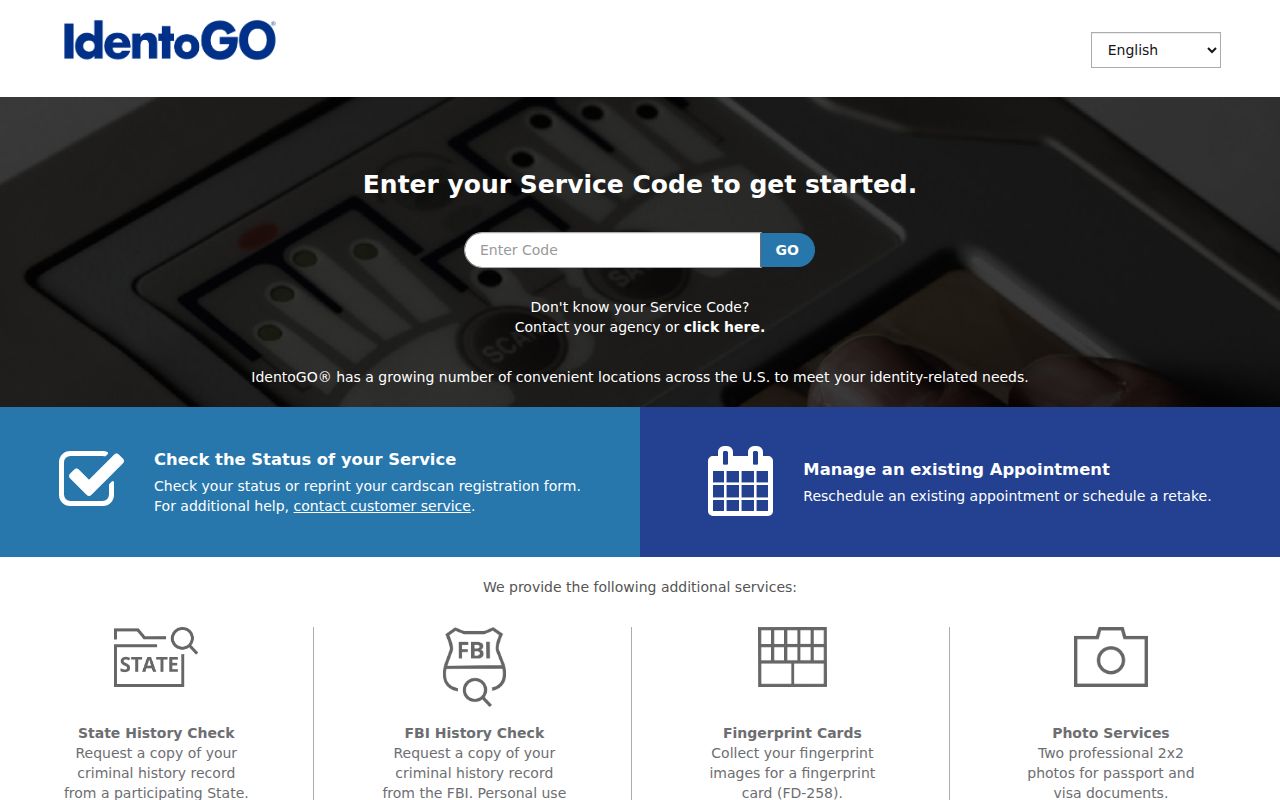
Search locations by ZIP when booking. Storefront sites and hours can change, so the live enrollment result should control.
| Record product | Coverage | Cost or access |
|---|---|---|
| NJSP Personal Record Request | The requester’s New Jersey CHRI | Current service-code fee shown at enrollment |
| Judiciary public search | Public cases in the selected court system | Search is free; copies or certification may cost |
| FBI Identity History Summary | The requester’s FBI-maintained identity history | $18 FBI fee plus any fingerprint or channeler cost |
Middlesex Fingerprint Record Path
A Middlesex County arrest can produce several records at once. The arresting agency writes the incident and arrest reports. Adult Corrections creates intake and custody data if the person is lodged. Live Scan fingerprints tie the arrest cycle to an identity and travel to the State Bureau of Identification, with fingerprint and palm-print information also forwarded to the FBI identification system when required. Courts later report dispositions back through Judiciary systems. Each custodian therefore answers a different question.
Record flow: Arresting agency › Middlesex booking and eCDR complaint › court disposition › NJSP computerized history › FBI identity system.
Delays and mismatched identifiers can leave a disposition absent from CHRI even after a court has resolved the matter. First obtain a certified judgment, dismissal, or disposition from the court. Then use the NJSP Criminal Information Unit challenge route. Correcting the court file and correcting the repository entry are distinct steps.
Types of Criminal Records
Middlesex County criminal records differ by creator and purpose. A report describes what police allege and investigated. A booking file tracks intake and confinement. A court file records what prosecutors charged and what the judge decided. CHRI links fingerprint-supported arrest cycles with reported results. A registry entry publishes only information that Megan’s Law authorizes for public safety. These sources should not be blended into one claim.
- Complaint
- The first sworn charging document, often created in the electronic complaint system.
- Indictment
- A grand jury accusation for an indictable crime. It is not proof of guilt.
- Disposition
- The current or final outcome of each charge, such as dismissal, plea, acquittal, or conviction.
- Booking record
- The county jail’s intake, custody, bail, transfer, and release record.
- CHRI
- The NJSP identity-linked criminal history built from arrest fingerprints and reported court outcomes.
- Expungement
- A court-ordered isolation of qualifying records from routine public access under New Jersey law.
Middlesex Jail Record Limits
The Middlesex Adult Correction Center public lookup answers a narrow question: who is currently housed in the county facility. It does not serve as a full Middlesex County arrest history. It can miss a person who has been released, transferred to the New Jersey Department of Corrections, cited without jail admission, or held elsewhere. A public result may show a name, booking identifier, admission date, limited descriptors, facility, charges, court or bail data, and release status. Charges remain allegations unless a court record establishes an outcome.
Use a fallback chain when the county lookup is empty. Check NJDOC for a sentenced state prisoner, the State Parole Board for a proper parole inquiry, and the relevant court for the filed case. Ask Adult Corrections for historical booking or release records through the county request channel. Middlesex County research did not verify a sheriff app or a countywide historic arrest blotter, so an empty web result cannot act as a clearance letter.
What a Middlesex County Criminal Record Shows
The contents depend on the source. A CHRI begins with identity data and then organizes arrest cycles. A Middlesex County court file gives more detail about hearings, motions, filed charges, pleas, and orders. A booking record is stronger on admission, bail, location, transfer, and release. Public versions suppress Social Security numbers, full birth dates, protected addresses, medical data, victim information, and many juvenile details.
Read charges count by count. One count may be dismissed while another ends in a plea or conviction. Pretrial Intervention and Recovery Court can create entries that do not read like a trial verdict, and completion of diversion must be confirmed through the filed disposition. New Jersey uses “crime” for first- through fourth-degree indictable offenses and “disorderly persons” or “petty disorderly persons” for non-indictable matters. A booking label is preliminary. The filed complaint, indictment, and final judgment show what the justice system pursued and resolved.
| Name and identifiers | Legal name, aliases, limited descriptors, SBI or FBI identifiers where authorized, and fingerprint-supported identity in CHRI. |
|---|---|
| Arrest and booking | Date, contributing agency, control or report number, booking number, lodging, bail, transfer, and release data. |
| Charges | Alleged offense, statutory citation, degree, count, complaint, accusation, or indictment identifier. |
| Disposition | Dismissal, plea, verdict, diversion result, judgment, or other count-specific status. |
| Sentence | Custody, probation, fines, penalties, restitution, and related orders when public. |
| Custody or supervision | County or state location and limited probation or parole status, without protected case-management notes. |
Middlesex Warrant Record Checks
No official countywide active-warrant name portal was verified. Middlesex County warrant research therefore starts with the issuing court. A municipal court can confirm a failure-to-appear matter. PROMIS/Gavel can show public status tied to an indictable case. The Sheriff’s Investigations Division executes court warrants and can explain its process, but a person should not rely on a stale third-party list or approach someone believed to be wanted.
Identify the court, complaint or case number, and warrant type before seeking instructions. An arrest warrant follows a probable-cause finding. A bench warrant commonly follows a missed appearance or violation. A search warrant authorizes a search and may remain sealed during an investigation. Once a court gives directions, comply with the required appearance or surrender process and later confirm that the warrant has been recalled in the court system. Juvenile, sealed, recalled, and newly cleared warrants may not appear in a public record.
Public Access Laws
Two systems govern much of the access work. The New Jersey Open Public Records Act applies to executive and local government records, including focused requests to county or municipal custodians. Judiciary records use Court Rule 1:38 instead. An OPRA request to the county cannot force the Judiciary to release a court file, and a court request does not reach a police department’s investigatory report. Ask for an identifiable document, a date range, and a known report or case number.
Key statutes and rules:
N.J.S.A. 47:1A-1 to -13 establishes OPRA access and protects criminal investigatory and other exempt material.
New Jersey Court Rule 1:38 presumes access to court records subject to exclusions, sealing, and redaction.
N.J.S.A. 53:1-20.6 and N.J.A.C. 13:59 govern authorized NJSP criminal-history dissemination.
N.J.S.A. 2C:52-1 et seq. controls expungement eligibility, process, effect, and exceptions.
Middlesex Criminal Records and OPRA
The county Prosecutor’s Office distinguishes releasable charging or disposition documents from restricted criminal histories and active investigative material. A useful request names a complaint, indictment, accusation, plea, judgment, dismissal, or other identifiable item. It includes the case or report number if known, relevant dates, and a preferred format. A broad demand for “everything” about a person can fail because no single Middlesex County custodian holds every record and exemptions must be reviewed record by record.
Police body-camera video, emergency call audio, victim statements, juvenile data, and active leads may need added review or may be withheld. Basic arrest facts do not make the whole investigation public. Requesters should separate the document they need from the conclusion they hope to draw. An agency supplies existing records. It does not have to answer a legal question, certify that no other record exists, or combine municipal, county, court, state, and federal systems into one report.
The Judiciary Criminal Records Room directory identifies the Middlesex channel for public Superior Court criminal documents.
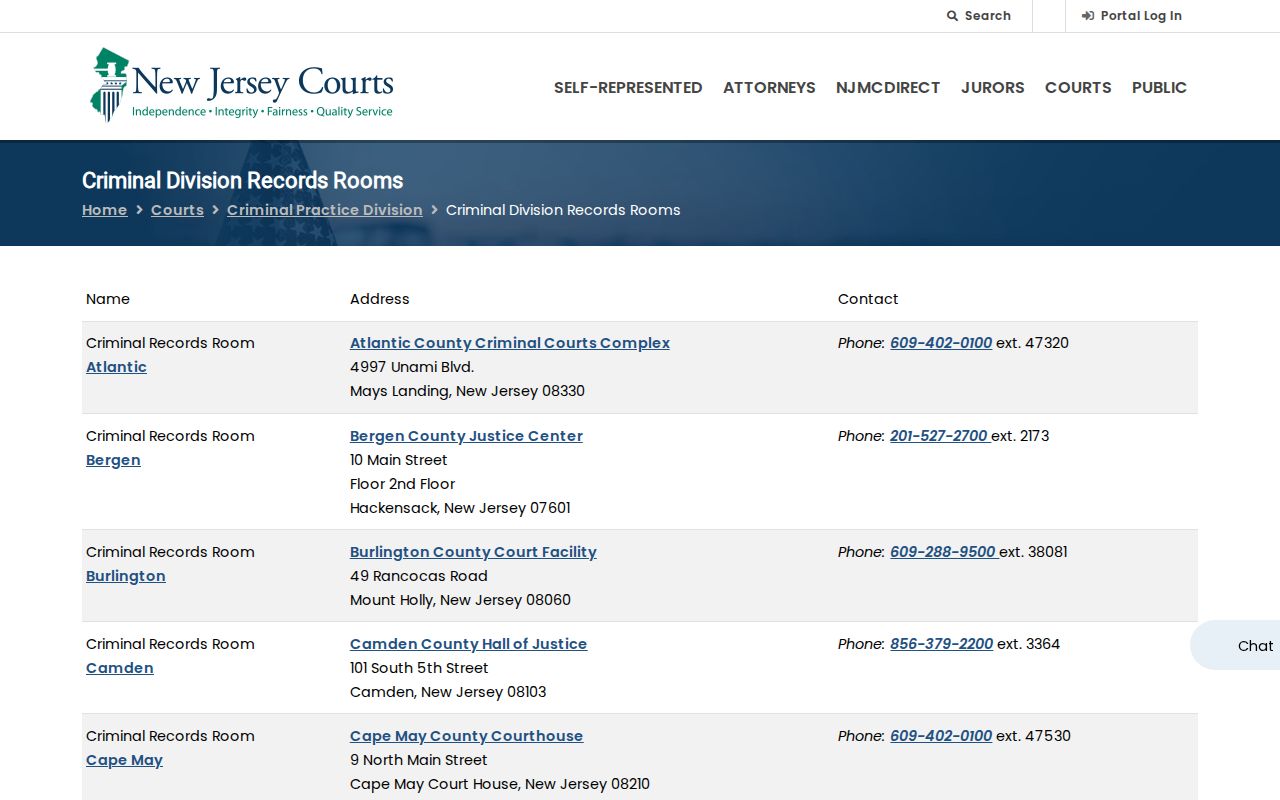
The Middlesex Criminal Records Room uses a New Brunswick mailing address and handles court records, not police reports, jail files, or NJSP rap sheets.
Sealed, Expunged & Restricted
Juvenile records, expunged matters, sealed filings, victim and minor identifiers, personal medical or financial data, and criminal investigatory material are not ordinary public results. Expungement does not erase history. It isolates qualifying arrest, court, jail, and related agency records from routine access while preserving limited uses allowed by statute. Eligibility depends on the full case sequence, the type and number of convictions, pending charges, payment issues, excluded offenses, and the applicable waiting rule.
The New Jersey Courts expungement service provides the official electronic starting point.
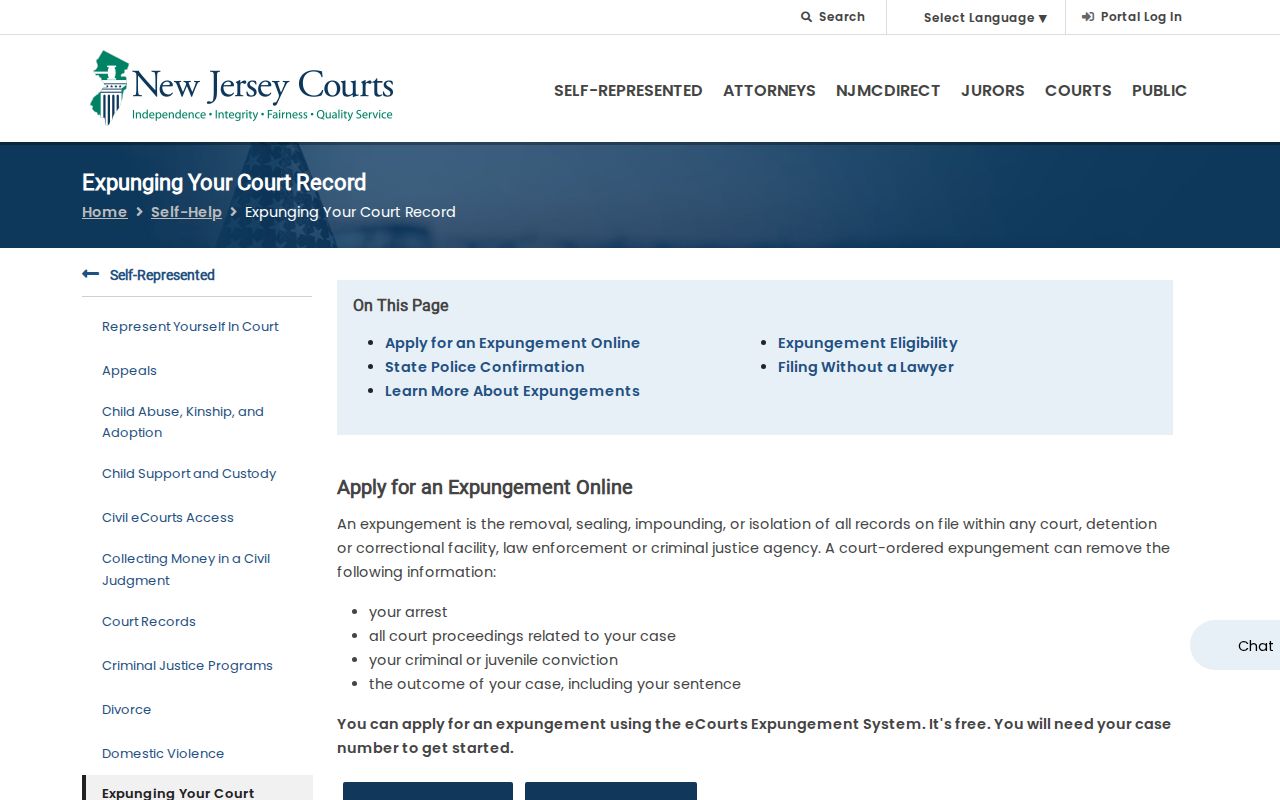
A Middlesex filer selects the relevant venue in the statewide system, reviews retrieved cases, adds omitted matters, chooses a supported path, and files. Agency updates may take time after an order is entered.
Correcting Middlesex Criminal Records
Correction and expungement solve different problems. A wrong or missing disposition should be fixed at its source. Obtain a certified court document and ask the clerk to correct the court file if the docket itself is wrong. If the Judiciary record is right but NJSP CHRI is incomplete, use the State Police challenge process and identify the disputed arrest cycle. Keep the signed final document because agencies may need it to match identifiers across systems.
Federal identity history has its own channel. The FBI electronic Identity History Summary portal accepts an individual’s request with fingerprints, biographical data, and payment.
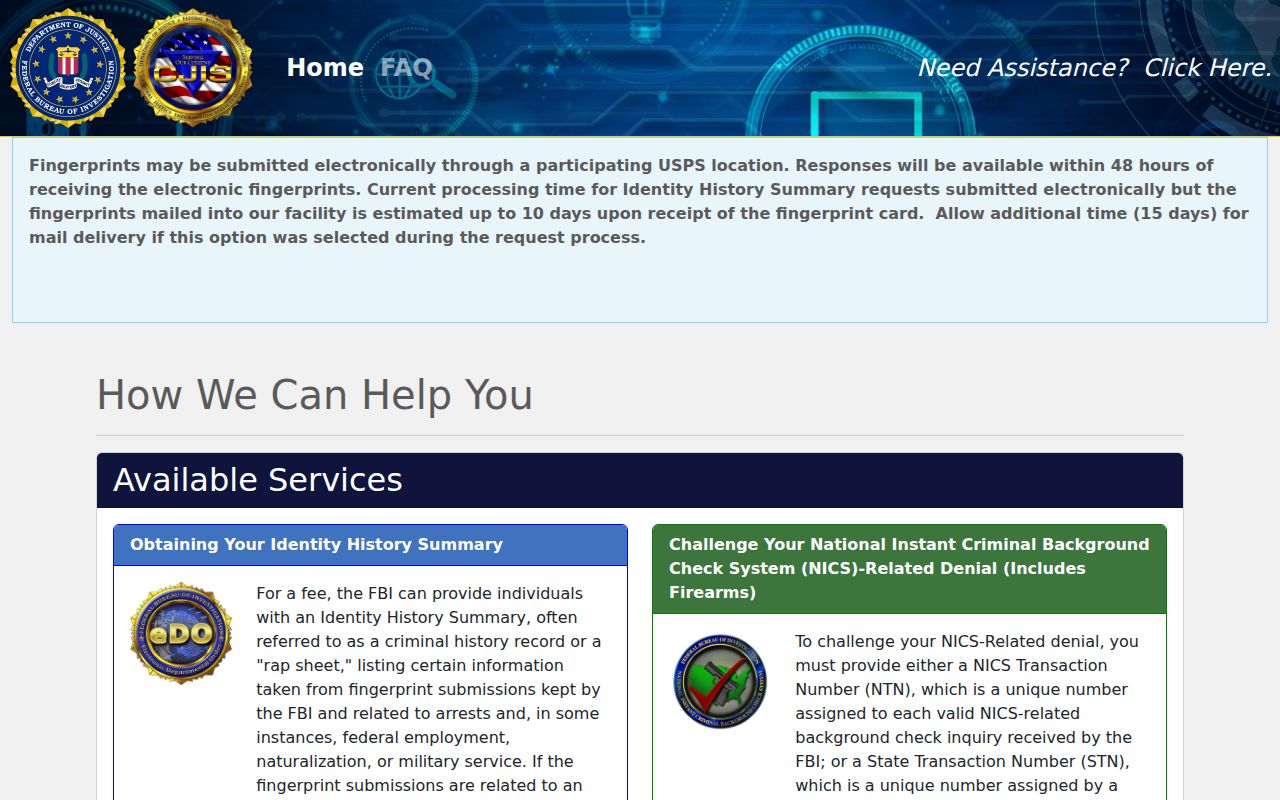
The FBI summary reflects data supplied to the federal system and has a separate challenge procedure. It does not replace the Middlesex court clerk or NJSP correction route.
Criminal Records by City in Middlesex County
Municipal police departments create their own incident and arrest reports, while municipal courts hear local traffic, ordinance, disorderly-persons, and petty-disorderly-persons matters. Middlesex County’s three largest municipalities are townships, but each is an incorporated New Jersey municipality with its own record custodians. Edison, Woodbridge, and Old Bridge searches therefore begin locally before moving to county jail, Superior Court, or NJSP channels.
Edison Criminal History
Edison Police records and Municipal Court searches route local cases before any indictable matter reaches New Brunswick.
Woodbridge Criminal History
Woodbridge publishes direct police-report pickup and exemplified disposition instructions.
Old Bridge Criminal History
Old Bridge police, Municipal Court, and county custody channels divide report, case, and booking records.
Middlesex Criminal Record Custodians
New Brunswick is the institutional center even though the largest Middlesex municipalities lie elsewhere. The right office depends on the document. County government begins at the Administration Building, the Sheriff operates from Livingston Avenue, Adult Corrections holds jail data, the Prosecutor handles indictable prosecution records subject to exemptions, and the state Judiciary keeps Superior Court files. Municipal police reports remain municipal. The state police repository and state corrections locator sit above the county level.
Middlesex Criminal Records Room
Middlesex County Courthouse
P.O. Box 964
New Brunswick, NJ 08903-0964
Middlesex County Sheriff
701 Livingston Avenue
New Brunswick, NJ 08901
732-745-3271
County Administration
75 Bayard Street
New Brunswick, NJ 08901
732-745-3000
The New Jersey Office of the Public Defender explains state-appointed defense services and regional representation.
Municipal public defenders use a separate local application process, while Superior Court appointments run through the state system.